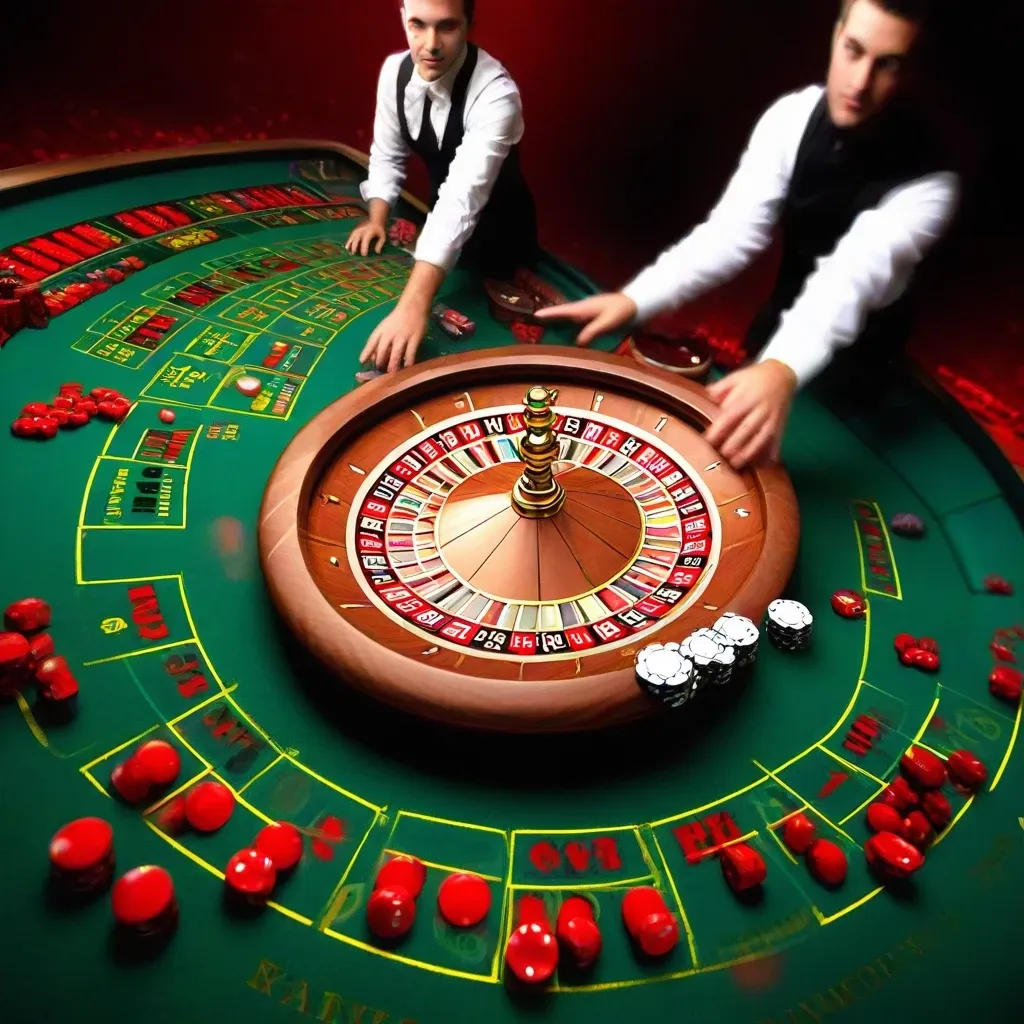
The casino rush is a potent cocktail of flashing lights, clattering chips, and the electric anticipation of a win. The air crackles with excitement as fortunes are won and lost in the blink of an eye. For a first-timer, stepping onto the casino floor is like entering another world, a sensory overload where anything feels possible. I still remember the first time I felt the felt—the weight of the chips in my hand, the almost unbearable suspense as the roulette wheel spun, deciding my fate with each dizzying rotation.
But beneath the glittering surface lies a stark reality: gambling involves risk. The allure of instant riches can quickly turn into a dangerous game if not approached with caution and a clear strategy. This article serves as your expert guide to navigating the casino environment responsibly. Explore proven strategies for managing your bankroll, understanding the odds, and making informed decisions, ensuring your casino experience remains thrilling, entertaining, and, above all, safe.
Understanding the Casino Rush
The ‘casino rush’ is a potent mix of psychological and physiological reactions triggered by the act of gambling. Imagine a surge of excitement as the roulette wheel spins or the anticipation before the dealer reveals the final card. These moments ignite the brain’s reward system, flooding it with dopamine, a neurotransmitter associated with pleasure and motivation. Simultaneously, adrenaline courses through the body, heightening senses, quickening the pulse, and creating a state of intense alertness.
From a psychological standpoint, the casino environment is carefully crafted to amplify these responses. Bright lights, vibrant colors, and the constant sounds of winning create an atmosphere of heightened stimulation. This stimulation, combined with the inherent uncertainty of gambling, leads to a state of heightened arousal. The potential for reward, however slim, keeps players engaged and chasing the next winning moment. It’s a potent feedback loop where each near-miss and small win reinforces the desire to keep playing, driving the ‘casino rush’ further.
The Illusion of Control: How We Think We Can Beat the Odds
A central element of the casino experience lies in the gambler’s perceived control that influences game results, though luck primarily drives games. Take, for instance, craps. Players often develop rituals – certain ways of throwing the dice, lucky numbers they bet on – believing these actions can influence the outcome. This ‘illusion of control’ is a powerful cognitive bias that tricks us into thinking we have more influence over random events than we actually do. Consider a time I was at a poker table, a player insisted on blowing smoke over his cards before each reveal, convinced it brought him luck. Of course, it didn’t change the cards, but it drastically influenced his bets.
The illusion of control feels solid because it is fed by other gambling fallacies. Gamblers fallacies arise when someone believes past independent events affect future outcomes. The ‘gambler’s fallacy,’ for example, might lead someone to believe that after a string of losses, a win is ‘due,’ or vice-versa. This overconfidence in one’s ability to predict randomness can lead to poor risk assessment and impulsive decisions, ultimately blurring the line between rational betting and chasing losses.
The House Always Wins (and Why)
The “house edge” is the casino’s built-in advantage in every game it offers. It represents the probability that the casino will profit from a game in the long run, regardless of short-term wins or losses for individual players. Think of it as a percentage of each bet the casino expects to keep over time. For example, a game with a 5% house edge means that, on average, the casino expects to retain $5 for every $100 wagered.
Different casino games have varying house edges. Blackjack, when played with optimal strategy, can have a relatively low house edge. Roulette’s house edge varies depending on whether it’s a European (single zero) or American (double zero) wheel – the latter offering the house a greater advantage. Slot machines typically have a higher house edge compared to table games. The Return to Player (RTP) percentage indicates how much of wagered money a slot machine pays back to players over time; the difference between the RTP and 100% is the house edge.
Debunking Gambling Myths: Separating Fact from Fiction
Many gamblers fall prey to common myths that distort their perception of probability and randomness. The “lucky streak” is a common one. Just because you’ve won a few hands doesn’t mean you’re guaranteed to keep winning; each hand is an independent event. Similarly, the “hot hand fallacy” assumes that success breeds success, ignoring the role of chance.
The “gambler’s fallacy” is the mistaken belief that if something happens more frequently than normal during a given period, it will happen less frequently in the future. For instance, believing that after a series of red results on a roulette wheel, black is “due” is a prime example. The wheel has no memory; each spin is random chance, and the odds remain the same regardless of previous outcomes. Such fallacies frequently lead to chasing losses, a dangerous path fueled by emotion rather than logic.

Know Yourself: Identifying Your Gambling Personality
Understanding your gambling personality is the first step toward responsible gaming. It’s about recognizing your individual tendencies, motivations, and risk tolerance when it comes to betting. Are you drawn to the adrenaline rush of high-stakes games, or do you prefer the social aspect of casual gambling with friends?
People approach gambling in different ways. There’s the thrill-seeker, who’s captivated by the uncertainty and potential for big wins, often overlooking the risks involved. The social gambler enjoys the camaraderie and entertainment, viewing it as a harmless pastime. On the other end of the spectrum is the problem gambler, whose behavior becomes compulsive and damaging to their personal and financial well-being.
Self-assessment is vital. Consider what motivates you to gamble. Is it the money, the excitement, or a way to escape stress? Honestly evaluating your gambling habits, including how much you spend, how often you play, and how you feel when you win or lose, can provide valuable insights into your gambling personality and risk tolerance.
The Importance of Emotional Awareness: Recognizing Your Triggers
Emotional awareness plays a crucial role in responsible gambling. Emotions like stress, boredom, and even excitement can significantly impair judgment and lead to impulsive decisions. Think about it: after a tough day at work, that urge to “unwind” with a few hands of poker might actually be a way to avoid dealing with underlying issues.
Identifying your personal triggers is key. Does gambling become more appealing when you’re feeling anxious, lonely, or celebrating a success? Once you recognize these triggers, you can develop coping mechanisms. Instead of turning to gambling when stressed, try exercise, meditation, or spending time with loved ones. Learning to manage your emotions and practicing cognitive restructuring – challenging negative thought patterns – are essential tools for maintaining control and preventing problem gambling.
Mastering Bankroll Management
Effective bankroll management is the cornerstone of responsible gambling, transforming it from a risky venture into a sustainable pastime. It’s about strategically allocating and protecting your financial resources, ensuring that gambling remains a source of entertainment, not financial distress. The key is to treat your gambling funds as a dedicated budget, separate from essential expenses.
To create a gambling budget, first, determine the amount of disposable income you can comfortably afford to lose without impacting your daily life. Next, divide this amount into smaller increments for each gambling session. For example, if you decide to dedicate $200 a month for gambling, you might allocate $50 per week. Setting win and loss limits is another crucial aspect. Decide in advance how much you’re willing to win or lose in a session. Once you reach either limit, stop playing. Resisting the urge to chase losses is paramount. Chasing losses often leads to impulsive decisions and bigger losses. It’s better to accept the loss and stick to your pre-defined limits.
The Power of Pre-Commitment: Setting Your Limits Before You Play
Pre-commitment is a powerful strategy for responsible gambling, involving setting limits before you even start playing. It harnesses your rational mind to protect you from impulsive decisions driven by emotions during the heat of the game. Self-exclusion programs are excellent examples of pre-commitment. Many casinos offer these programs, allowing you to voluntarily ban yourself from their premises. Similarly, online casinos provide responsible gambling tools that enable you to set time limits and spending limits. These features automatically restrict your play once you reach your pre-defined thresholds. By embracing pre-commitment, you proactively manage your gambling behavior, turning potential risks into controlled, manageable actions.
Playing Smart: Casino Game Selection and Strategy
Not all casino games are created equal. Some offer far better odds than others, giving the savvy player a slight edge, or at least minimizing potential losses. Forget the flashing lights of slot machines; those are designed to drain your wallet quickly. Instead, focus on games that involve skill and strategy, like blackjack, poker, and video poker. Blackjack, when played with basic strategy, has one of the lowest house edges. While mastering card counting is complex, understanding basic hit/stand decisions significantly improves your odds.
Video poker, particularly certain variations like Deuces Wild or Jacks or Better, can also offer favorable odds to those who learn optimal play. The key is to study pay tables and understand which hands to hold and discard. Remember, even with perfect strategy, the house still has an edge. These strategies improve your chances, but don’t guarantee winnings. A specific game example is Texas Hold’em Poker. Understanding starting hand values, position at the table, and reading opponents are crucial skills. While luck is involved, skilled players consistently outperform weaker players over time.
Understanding Variance: Why Short-Term Results Don’t Tell the Whole Story
Variance is the measure of how spread out a set of numbers are from their average value. In gambling, variance explains the swings in your bankroll. You might win big in one session, but that doesn’t mean you’re a skilled player or that your strategy is foolproof. Conversely, a losing streak doesn’t necessarily indicate a flawed approach. These ups and downs are a natural part of the game due to variance.
For example, playing a coin flip game, betting 10 dollars each time, it’s possible to win 10 times in a row. The other player will think that you are good at it but it’s a probability outcome. I once witnessed a friend hit a royal flush on a video poker machine within the first few hands of playing. He thought he had discovered some secret strategy! Of course, he lost all his winnings and more within the hour and soon understood that his early win was purely a matter of chance.

Recognizing the Red Flags: Identifying Problem Gambling
Problem gambling, also known as gambling addiction or compulsive gambling, can manifest through a variety of warning signs. These signs often include an uncontrollable urge to gamble, chasing losses in an attempt to recoup money, lying to family and friends about gambling activities, and neglecting responsibilities at work, school, or home due to gambling. Difficulty controlling the amount of money or time spent on gambling is another common indicator. Getting help early is crucial. Resources are available to provide support and guidance. If you or someone you know is struggling, resources like helplines and support groups can provide a path toward recovery. A friend of mine once found himself in a downward spiral. He started small, just a few bets on sports games, but soon it consumed him. He started borrowing money from friends and family, lying about where it was going. His relationships suffered, and he eventually lost his job. It was a wake-up call, and with the help of therapy and support groups, he was able to turn his life around. Recognizing the signs early is the first step to preventing such devastating consequences.
The Impact on Relationships and Finances: Understanding the Ripple Effect
The consequences of problem gambling extend far beyond the individual, creating a ripple effect that can devastate relationships and finances. Relationships often suffer as trust erodes due to deception and financial strain. Loved ones may feel betrayed, neglected, and resentful, leading to conflict and even separation. Financially, problem gambling can lead to mounting debt, loss of savings, and even bankruptcy. The stress and anxiety associated with these financial problems can also take a toll on mental health, leading to depression, anxiety, and social isolation. A family member of mine went through a period of intense gambling. It created tension at home because of debts. It affected their capacity to focus on tasks at work and family matters. Recognizing these potential consequences is essential for seeking help and preventing further damage.
Maintaining a Balanced Approach: Integrating Casino Entertainment Responsibly
Casino gambling can be a thrilling form of entertainment, but it’s crucial to enjoy it responsibly. The key is moderation. Think of it like enjoying a delicious dessert – a small slice can be a treat, but overindulging can lead to problems. Set limits for spending and time. Once you’ve reached those limits, step away. It’s also important to take frequent breaks. Get up, stretch, grab a coffee, and clear your head. Prioritize other activities you enjoy, like spending time with loved ones, pursuing hobbies, or simply relaxing. Gambling should complement your life, not consume it. I remember a time when I got caught up in the excitement of a winning streak and neglected other important aspects of my life. It wasn’t until I consciously made an effort to re-establish balance that I was able to enjoy gambling responsibly and in moderation.
Seeking Support and Community: Connecting with Others Who Understand
If you’re finding it difficult to maintain a balanced approach, remember you’re not alone. Support groups can provide a safe and non-judgmental space to share experiences and receive encouragement from others who understand what you’re going through. Connecting with a community and understanding shared experiences can be incredibly beneficial on the path to recovery and responsible gambling habits.
Conclusion
Casino gambling offers a world of excitement and potential rewards, but it’s crucial to remember that it’s a game of chance. Approaching it with awareness, understanding the risks involved, and employing responsible gambling strategies are vital for a positive and enjoyable experience. This guide has provided strategies – from understanding odds to managing your bankroll – empowering you to make informed decisions. By prioritizing responsible gambling habits, you can minimize potential downsides and maximize your enjoyment of the casino experience. So, go ahead, test your luck, but always remember: awareness and responsible habits are the best strategies of all.
Disclaimer
Gambling involves financial risk and may lead to addiction. It is crucial to gamble responsibly and within your means. The legality of online gambling varies by jurisdiction. This content is for informational purposes only and does not constitute legal advice. We are not responsible for any losses incurred while gambling. Readers are advised to check their local laws before participating in any gambling activities. For any questions, please contact the author.